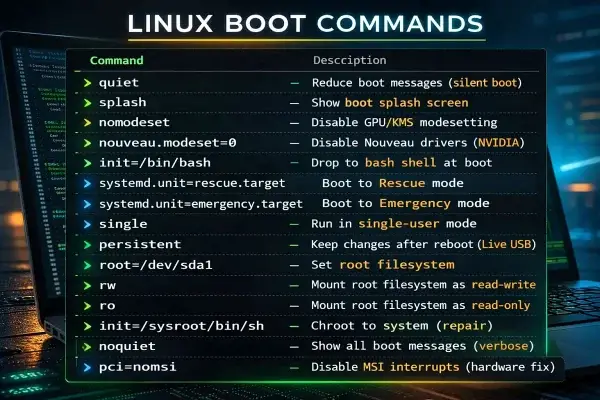
Linux Boot Commands
Linux boot commands, also known as cheat codes or kernel parameters, are powerful startup options used to troubleshoot, repair, and optimize Linux systems during boot. These parameters are especially useful when booting from USB drives on different hardware, fixing display issues, enabling persistence, or recovering from boot failures.
Troubleshooting Boot Problems
Many Linux boot issues can be solved by adding simple kernel parameters during startup. These are commonly used to fix hardware compatibility problems, graphics issues, and boot failures.
- Black screen or no display issues
- System freezes during boot
- USB drive not detected at startup
- Compatibility issues with older hardware
Common parameters include options like nomodeset, acpi=off, and other kernel-level boot flags used across many distributions.
Advanced Boot Options
Advanced Linux boot commands allow deeper control over how the system loads. These are useful for system recovery, performance tuning, and diagnostic booting.
- Booting Linux directly into RAM for faster performance
- Single-user and rescue mode startup
- Debug and diagnostic boot modes
- Custom kernel parameter configurations
Persistence and Live USB Features
Some boot commands enable persistence, allowing changes to be saved on a Live USB environment. This is essential for portable Linux systems.
- Enable persistent storage on USB drives
- Save system changes across reboots
- Configure overlay and live filesystem behavior
Linux Distribution Boot Guides
Each Linux distribution supports its own set of boot parameters and cheat codes. Select your distribution below for specific instructions:
Why Linux Boot Commands Matter
These boot parameters are essential tools for system administrators, developers, and users running Linux from USB environments. They help ensure compatibility across different machines, reduce boot failures, and provide advanced control over system startup behavior.
Whether you are repairing a system, testing Linux distributions, or running a portable operating system from USB, these cheat codes give you direct control over the boot process.

Ubuntu Cheat Codes, boot options, and kernel parameters can help you boot Ubuntu from a USB flash drive on different machines. These Ubuntu boot parameters allow you to customize the boot process, fix hardware compatibility issues, and enable persistence, among other features. To append cheat codes during bootup, press the ESC key if you are booting from Syslinux or press E to edit, if booting from GRUB. Then proceed to add one or more of the following boot options to your existing boot string, and press ENTER to boot.
PCLinuxOS CheatCodes and boot parameters; These cheat codes or boot codes allow you to override the PCLinuxOS boot parameters from their defaults by modifying the Live USB booting process to suite your specific needs or adapt to specific system hardware. The codes can be used on their own as specified on the syslinux initial boot command line or can be combined with more than one boot code option listed below.

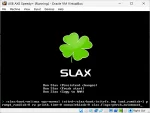
SLAX Cheat Codes also known as SLAX Boot Options or additional boot parameters are optional startup arguments that control how SLAX boots, detects hardware, loads modules, and handles persistence. Some boot parameters are standard Linux kernel options, while others are SLAX specific. Using cheat codes allows you to troubleshoot hardware issues, control persistence, boot SLAX from alternative locations such as system RAM, skip login prompts, or optimize performance.

KNOPPIX Boot Options or Cheat Codes: Here is a comprehensive list of available KNOPPIX boot command options. These cheat codes, also referred to as KNOPPIX boot parameters or KNOPPIX startup options, enable you to modify the boot process. They are indispensable for troubleshooting, optimizing, and Live Booting KNOPPIX on even the most challenging hardware setups.