XBOOT is a Windows based multiboot ISO USB creator that lets you combine multiple Linux distributions, rescue tools, and diagnostic utilities onto a single bootable USB flash drive or multiboot ISO file. Similar to YUMI, it uses a simple drag-and-drop interface and supports both Grub and Syslinux bootloaders.
Quick summary: XBOOT is no longer actively maintained, but it remains a functional option for creating legacy BIOS multiboot USB drives. If you need UEFI support or active development, see the alternatives such as YUMI Multiboot USB Creator or our fan favorite UUI PY Bootable USB Tool.
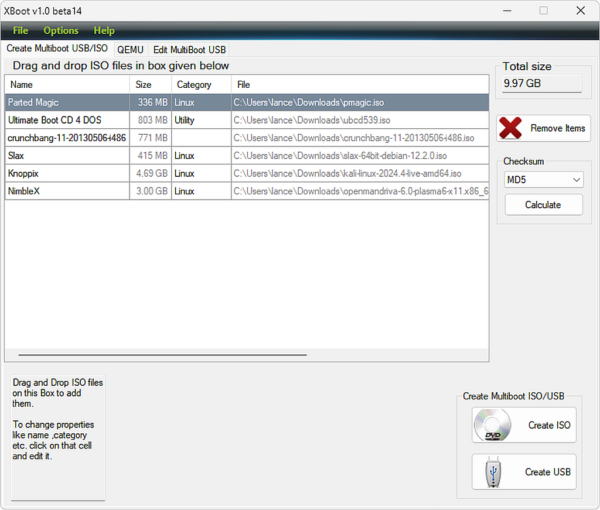
XBOOT supports a wide range of Linux distributions and utilities, includes a built-in QEMU emulator for testing ISO files directly within Windows, and can also build a multiboot ISO file that can be burned to a CD or DVD.
Although the project is no longer actively developed, it remains a useful tool for those working with legacy BIOS systems or looking to create simple multiboot USB drives without needing UEFI support.
Why Use XBOOT?
If you need to create a multiboot USB flash drive containing several Linux distributions, rescue tools, and diagnostic utilities, XBOOT offers a straightforward solution. Its drag-and-drop interface makes it accessible to beginners, while its support for multiple ISO images and flexible bootloader options gives more experienced users enough control to build a practical portable toolkit.
Multiboot USB drives are especially useful for IT professionals, system administrators, Linux enthusiasts, and anyone who regularly works with multiple operating environments. Instead of carrying separate drives for each tool, everything loads from a single boot menu on one USB stick.
Tools like XBOOT are particularly valuable in environments where internet access is limited, or when servicing multiple machines that require different operating systems or recovery utilities. A single USB drive loaded with several ISOs reduces clutter, saves time, and gives you flexibility in the field. Whether you are testing Linux distributions, running antivirus scanners, or repairing disk partitions, having everything on one portable drive simplifies your workflow considerably.
Another practical advantage is that XBOOT is portable - it runs directly from the extracted executable without requiring installation. This makes it well suited for technicians who troubleshoot machines across different locations and need a tool that can run anywhere without leaving a footprint on the host system.
Features and Summary
XBOOT is a lightweight, portable tool for creating Live Linux multiboot USB drives and multiboot ISO files on Windows. It supports a wide range of distributions and utilities, making it a practical option for users who want to boot multiple Linux systems from a single device.
- Supports many Linux distributions and bootable utilities
- Choice of Grub or Syslinux bootloader
- Built-in QEMU emulator to test ISO files within Windows before rebooting
- Creates Live Linux multiboot USB drives or multiboot ISO files
- Can build a multiboot ISO containing multiple distributions for burning to CD or DVD
- Drag-and-drop interface - no advanced technical knowledge required
- Portable - runs without installation on Windows 7, XP, and later versions
Compatible with popular ISO images including Ubuntu, Debian, Fedora, Knoppix, antivirus rescue disks, and more. Note that XBOOT uses legacy bootloaders only and does not support UEFI or Secure Boot.
Specifications and Download
- Author's Website: Archived Project Page
- Developer: Shamur
- Release date: First released in 2010
- Last Version Download: XBOOT v1.0 beta14 (July 18, 2011)
Note: Unfortunately, Shamur, the original author of this tool is no longer with us. As a result, this project is no longer actively developed or maintained.
Looking for a modern alternative to XBOOT? See the best bootable USB creation tools category, where actively maintained utilities including UUI, YUMI, and Ventoy are listed.
How to Create a Multiboot USB with XBOOT
Follow these steps to create a Live Linux multiboot USB drive or multiboot bootable USB using XBOOT:
- Download XBOOT, extract the ZIP file, and run the executable directly - no installation is required.
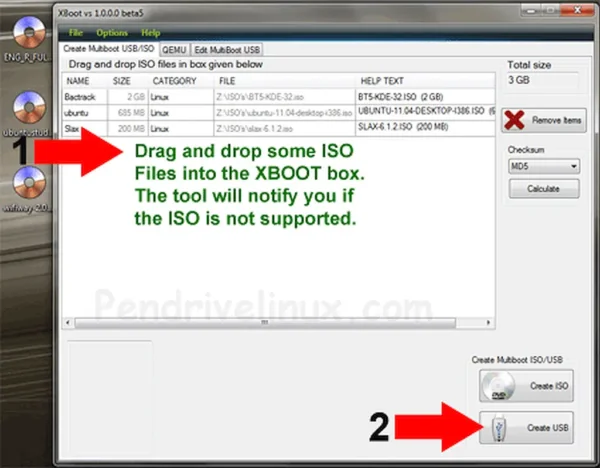
- (1.) Drag and drop your ISO files into the program window.
(2.) Then click Create USB.
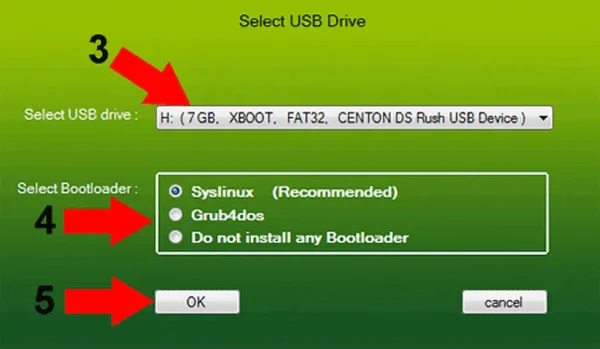
- (3.) Select your USB drive from the dropdown list.
(4.) Select a bootloader - Grub or Syslinux.
(5.) Click OK to begin creating the multiboot USB drive.
A progress window will appear during the creation process. Once complete, your USB drive will contain all selected ISO images accessible from a single boot menu.

- Insert the finished USB drive, restart your PC, and enter your BIOS or UEFI using your motherboard's hotkey.
Set the first boot device to your USB drive, save changes with F10, and boot from the drive.
Using a multiboot USB creator like XBOOT is a practical way to test Linux distributions, build a portable troubleshooting toolkit, or prepare a system recovery drive - all from a single USB stick.
XBOOT Limitations to Be Aware Of
XBOOT is a useful tool, but it has important limitations compared to modern alternatives:
- No UEFI support - uses legacy Grub and Syslinux bootloaders only; not suitable for UEFI-only systems
- No Secure Boot compatibility - cannot boot on systems requiring Secure Boot
- No dynamic ISO management - adding or updating ISOs requires recreating the entire USB from scratch
- No longer maintained - last updated in 2011; newer ISO formats and distributions may not be detected correctly
- No files larger than 4 GB - FAT32 limitation applies; some modern ISOs exceed this size
For systems requiring UEFI, Secure Boot, or the ability to add and remove ISOs without rebuilding the drive, a modern tool such as YUMI or Ventoy is a better fit.
Frequently Asked Questions
Is XBOOT still safe to use?
Yes, it is safe as long as it is downloaded from a trusted source such as the official archived page or the Pendrive Apps link provided above. The application itself has not changed since 2011.
Can I use XBOOT on Windows 10 or 11?
Although originally designed for older versions of Windows, XBOOT still works on Windows 10 and may work on Windows 11 with compatibility mode enabled. Running it as administrator can resolve some issues on newer systems.
Does XBOOT support UEFI boot?
No. XBOOT uses legacy bootloaders - Grub and Syslinux - and does not support UEFI or Secure Boot. If your system requires UEFI booting, YUMI or Ventoy are better alternatives.
Can I add or update ISOs later without rebuilding the USB?
No. XBOOT does not support dynamic ISO management. To add or replace ISO files, you will need to recreate the multiboot USB from scratch.
What is the best alternative to XBOOT?
For most users, YUMI is the most direct alternative - it supports exFAT, UEFI booting, dynamic ISO management, and is actively maintained. Ventoy is another excellent option that lets you simply copy ISO files to the drive without any configuration.
Can XBOOT create a multiboot ISO file as well as a USB?
Yes. In addition to writing directly to a USB drive, XBOOT can build a multiboot ISO file containing multiple distributions, which can then be burned to a CD or DVD.
Can XBOOT test ISOs without booting the computer?
Yes. XBOOT includes a built-in QEMU emulator that lets you boot and test ISO files or the completed USB drive directly within Windows, without needing to restart your machine.
Should I Use XBOOT to Make a Multiboot USB?
XBOOT remains one of the simplest tools for creating a legacy BIOS multiboot USB drive. Its drag-and-drop interface, built-in QEMU testing, and flexible bootloader options make it approachable for beginners and still practical for anyone working with older hardware that does not require UEFI support.
That said, its limitations are real. No UEFI support, no dynamic ISO management, and no active development mean it is not the right choice for modern systems or complex multiboot environments. If you need to boot on newer hardware, manage ISOs without rebuilding from scratch, or work with files larger than 4 GB, a modern alternative will serve you better.
If you are working with legacy BIOS systems and want the simplest possible multiboot USB setup, XBOOT gets the job done. For everything else, YUMI or UUI are still actively maintained tools worth using instead.