Create a bootable xPUD persistent USB flash drive using Windows. xPUD is an intuitive, minimal Linux operating system originally created by Penk. It functions much like a kiosk-style OS, focusing on speed, simplicity, and low resource usage. It is ideal for quick web access, lightweight tasks, and portable computing.
It ships with several essential applications preinstalled, including the Firefox web browser, Gnome Media Player, Transmission BitTorrent client, Geany text editor, Gpicview image viewer, EPDFView PDF reader, and the Xterm terminal emulator. Additional Linux applications can be installed as needed, making it a flexible option despite its minimal footprint.
xPUD Desktop USB Boot
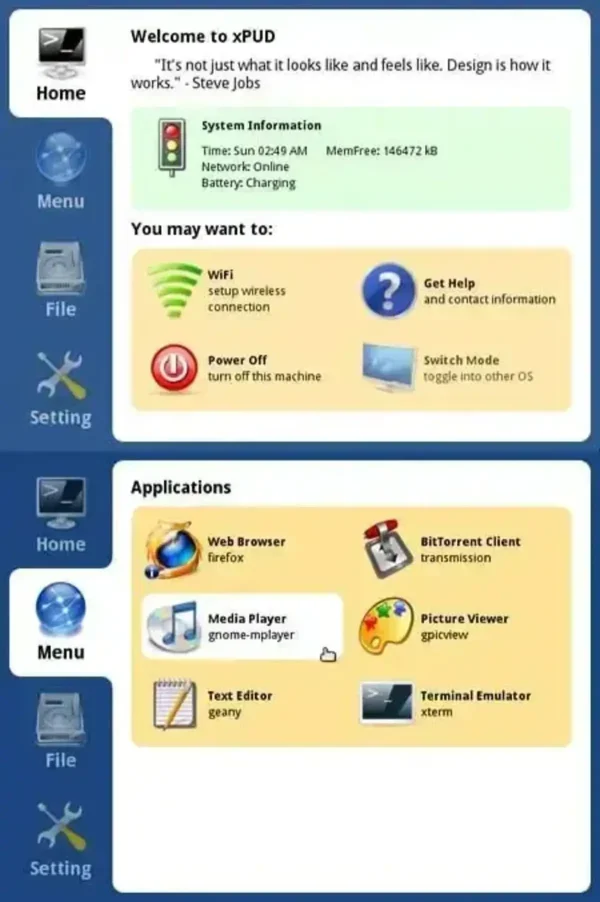
This lightweight Linux distribution was designed and optimized for netbooks, but it runs just as well on desktops and laptops since the required drivers are already included. One of its biggest advantages is speed. The entire operating environment can boot in just a few seconds when run from a USB flash drive, making it a great option for troubleshooting, public kiosks, or fast portable Linux access.
Distribution Home Page: Project Page (This Legacy distro is no longer updated)
Minimum Flash Drive Capacity: 128 MB (note that YUMI requires more than 2 GB)
Persistent Feature: Yes, via built-in backup functionality
Prerequisites for Creating a Live USB with Persistence
- A Windows PC
- The xPUD ISO file
- A USB flash drive formatted as FAT32
- YUMI Multiboot Bootable USB Tool
How to Create a Live USB xPUD Flash Drive Using YUMI
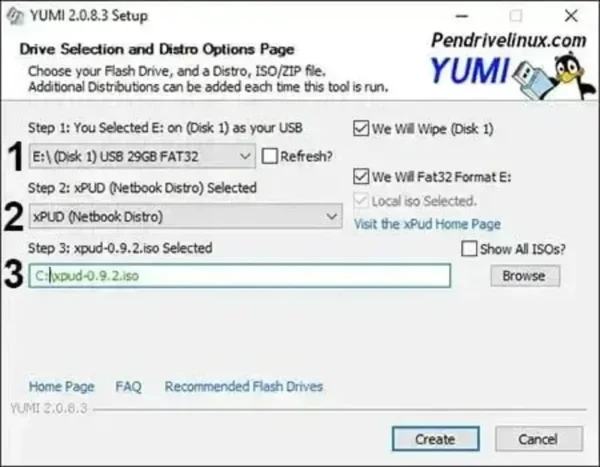
- Download and launch the YUMI Multiboot Bootable USB Tool.
- (1) Select your USB flash drive.
(2) Choose xPUD from the list of supported Linux distributions.
(3) Browse to and select your xPUD ISO file, then click Create.
- Once YUMI finishes creating the bootable USB drive, restart your PC. Enter your BIOS or boot menu, set the system to boot from the USB device, save your changes, and reboot.
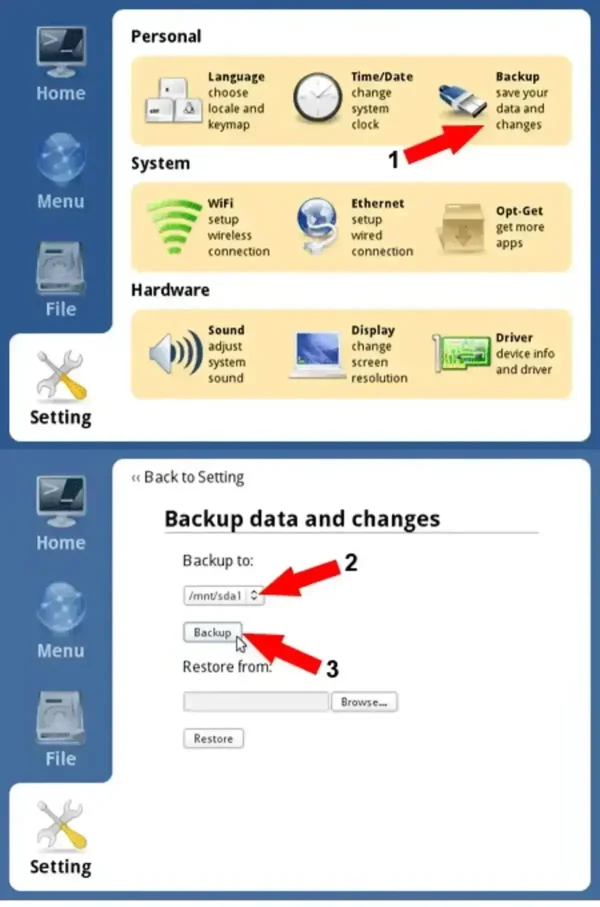
- After xPUD boots and you have configured the system to your liking:
(1) Click Settings > Backup.
(2) Set Backup to location to your USB device.
(3) Click Backup to save your changes for persistence.
You should now have your own personal Live USB xPUD with persistence enabled. Most system changes, settings, and user data will be saved back to the USB flash drive and automatically restored on future boots. This makes it a fast, portable Linux solution that you can carry and use on almost any compatible computer.