Pendrive Linux

As the founder of Pen Drive Linux, I dream that some day, a majority of the population might be able to carry Linux with them on a portable USB device such as a flash drive. Boasting the ability to walk up to any PC or terminal, USB boot and run their own operating environment, remove the device when finished, and walk away. Leaving no information behind on the PC or terminal they used.

Make a USB Boot CD for Kubuntu
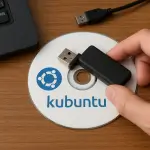
create a USB Boot CD for Kubuntu

How to create a USB Boot CD for Kubuntu. This can be used to boot a Kubuntu Live USB flash drive from a computer with a BIOS that does not natively support booting from USB. The USB boot CD created using this tutorial launches the initrd (Initial Ram Filesystem) along with the necessary USB drivers from the CD, and then tries to boot the squash filesystem from the USB drive.

Run Damn Small Linux in Windows

DSL - Damn Small Linux bootable USB

Looking to Run Damn Small Linux in Windows? The following tutorial explains how you can run Damn Small Linux (DSL) directly inside Windows using Qemu Emulation technology. DSL is a super lightweight Linux operating system. It is famous for its tiny footprint and ability to run on old computer hardware.

Make a SLAX Bootable USB Drive

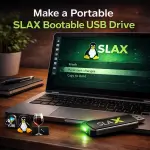
portable slax bootable usb drive

How to Make a Portable SLAX bootable USB drive: Running Linux from a flash drive gives you portability, flexibility, and a practical way to test or troubleshoot computers without affecting your primary system. In this walkthrough, you'll learn how to set up a SLAX live USB using YUMI Multiboot USB Creator on Windows, or on Linux via WINE. Methods are also provided to help do the same natively from Linux or a macOS.

Windows USB Kiwi Linux Flash Drive creation

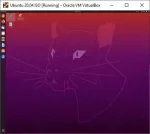
Ubuntu Running From Windows

How to Create a USB Kiwi Flash drive: In the following tutorial, I will explain how to quickly and easily install Kiwi Linux to a USB flash drive using Windows and UUI. Kiwi Linux is a minimal remix based on Ubuntu that includes Adobe Flash along with audio and video codecs for restricted formats and support for encrypted DVDs. This distribution is for English, Romanian, and Hungarian speaking users. This tutorial does support the persistence feature, enabling you to save and restore most of your changes on subsequent boots.

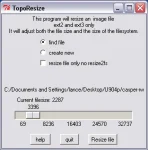
How to Resize casper-rw Partition Images

resize casper rw using toporesize

How to Resize Casper-RW Partition Images. TopoResize is a free image resizing tool originally written by Chris Semler. Initially created to resize images containing an ext2 or ext3 file system within Windows (such as those found in Colinux), it can also be used to create a new filesystem image as well as shrink or enlarge existing persistent overlay images.

Create a Bootable USB Debian Live Flash Drive

debian live usb

Creating a Debian Live USB flash drive is the easiest way to try Debian or install it on your internal hard drive without touching your main system. Whether you're on Windows, Linux, or macOS, there are several tools available that make the process simple, including Etcher, YUMI Multiboot, and the dd command. You can also enable persistence to save files and system changes across sessions, turning your USB into a fully portable Debian environment.

Make a Sugar on a Stick Bootable USB Flash Drive

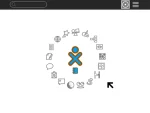
sugar on a stick start menu

Make a Sugar on a Stick USB bootable flash drive. Sugar on a Stick (SoaS) is a Fedora based portable Linux distribution designed specifically for education. It provides the Sugar Learning Platform, a child friendly desktop environment created to promote collaborative learning, creativity, and critical thinking through hands on activities. This pendrive oriented Linux operating system is commonly used in classrooms, learning labs, and low resource environments as a lightweight educational operating system that runs entirely from a USB flash drive.

Make a Persistent Eeebuntu Bootable USB

eeebuntu flash drive

This tutorial will guide you through the steps to create a bootable USB drive with Eeebuntu, a lightweight Linux distribution originally tailored for Asus EeePC netbooks. With persistence enabled, your portable operating system can save files, settings, and system changes between reboots, turning a basic flash drive into a powerful on the go portable Linux workstation.

How to Create a Parted Magic Bootable USB

usb parted magic

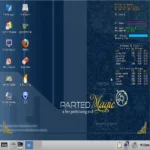
In the following tutorial, I cover how to create a Parted Magic bootable USB flash drive from within Windows. This fully functional portable Operating System doubles as a disk management utility to help you perform disk editing, disk imaging, and partitioning tasks with ease.

Sharing Files Between Ubuntu and Windows

sharing files between ubuntu and windows

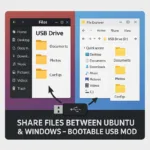
Sharing Files Between Ubuntu and Windows. Need to transfer files between Linux and Windows using a bootable USB drive? By default, Ubuntu's casper script mounts the USB drive as read-only for non-root users. This restriction prevents saving files to the USB when running Ubuntu live from a flash drive. However, with a simple file sharing tweak, you can enable full read/write access, allowing seamless file sharing across both systems.

Install MooLux to a USB Flash Drive in Windows

moolux linux

How to Install MooLux Linux Live to a USB Flash Drive Using Windows: Looking for a portable Linux distribution that you can run from a USB stick? This tutorial will guide you through the step by step process of installing MooLux Linux Live to a USB flash drive using a Windows computer. This lightweight, Slackware based Linux distro runs the KDE desktop environment and comes preloaded with a suite of tools for programming, office productivity, multimedia, and more.

Install xPUD to a Flash Drive from Windows

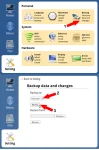
xpud backup and persistentce

Create a bootable xPUD persistent USB flash drive using Windows. xPUD is an intuitive, minimal Linux operating system originally created by Penk. It functions much like a kiosk-style OS, focusing on speed, simplicity, and low resource usage. It is ideal for quick web access, lightweight tasks, and portable computing.

It ships with several essential applications preinstalled, including the Firefox web browser, Gnome Media Player, Transmission BitTorrent client, Geany text editor, Gpicview image viewer, EPDFView PDF reader, and the Xterm terminal emulator. Additional Linux applications can be installed as needed, making it a flexible option despite its minimal footprint.

What is Persistent Linux?

What is Persistent Linux

What Is Persistent Linux and Why Use It? If you've explored tutorials on sites like Pen Drive Linux, you've probably come across the concept of creating a persistent Linux bootable USB. But what does that actually mean? In this guide, we'll break down how it works, why saving data across reboots matters, and how to set up your own portable Linux system that remembers your changes.

Install MoonOS LXDE to a Flash Drive using the CD

moonos screenshot

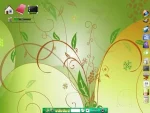
Create a USB Bootable MoonOS LXDE USB Flash Drive using the Live CD. In the following tutorial, I will show you how to create your own Portable USB MoonOS LXDE Persistent Linux Operating System from the Live CD by using the USB Creator (created by the Ubuntu Team). MoonOS LXDE edition is a Linux Remix based on Ubuntu, but uses the LXDE desktop environment. The MoonOS project a Mix of Art and Operating System was designed and founded by Chanrithy Thim a Cambodian artist.

CoLinux Portable Ubuntu for Windows

colinux portable ubuntu

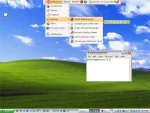
Portable Ubuntu Remix for Windows (Pubuntu) is a project led by Claudio Cacsar Sánchez Tejeda, utilizing CoLinux (Cooperative Linux) to allow users to run a full Ubuntu Linux environment on top of Windows. CoLinux, a port of the Linux kernel, is an open-source virtual machine, which functions similarly to QEMU but is often praised for its superior performance.

Create a Knoppix Bootable USB using the CD

select the option to store on flashdisk

Best Way to Create a Knoppix Bootable USB Flash Drive using a CD: Knoppix Linux, developed by Klaus Knopper, is a powerful Live Operating System famous for its hardware detection, making it perfect for system recovery, troubleshooting, or simply trying Linux without installing it on a hard drive. There is also ADRIANE, an accessible version with the Orca screen reader for visually impaired users.

Create a larger casper-rw loop file in Linux

larger casper-rw persistent loop file

The following tutorial explains how to create a larger casper-rw loop file (or writable file) for your Ubuntu based USB flash drive install. For example, on: Ubuntu, Xubuntu, Kubuntu, Lubuntu, Crunchbang, or Linux Mint. A larger casper-rw loop file is particularly useful for those who have performed a Linux install to a large thumb drive using a Windows USB tutorial and need more casper persistent storage space for saving changes. The default casper-rw loop file we used in the Windows USB installation tutorials is only 1GB.

Install PUD Linux to a Flash Drive using Windows

pud linux desktop

Create a PUD Linux USB Flash Drive using Windows. In the following tutorial, we cover the process of installing PUD Linux to a USB Flash Drive using Windows and our custom installation script. This is a tiny 259MB Ubuntu based remix. It utilizes an (LXDE) Lightweight X11 Desktop Environment and a unique Modular Opt-Get Plugin System to add additional software applications.

SLAX USB Boot CD

SLAX Boot CD

Boot SLAX Linux from USB on older computers: The SLAX USB Boot CD allows you to start SLAX Linux from a USB flash drive on systems that cannot boot from USB on their own. This includes older PCs with legacy BIOS firmware and some Intel based Apple Mac computers, such as MacBook and MacBook Pro models, that rely on EFI instead of a traditional BIOS.

This special bootable CD was created by Tomas M, the original developer of SLAX Linux. The CD loads the required USB drivers first, then hands control over to the SLAX system stored on your USB flash drive.

Make a USB Boot CD for CrunchBang Linux

This tutorial will guide you through creating a USB Boot CD that enables you to boot CrunchBang Linux from a USB flash drive on systems that don't natively support USB booting. By using a GRUB bootloader on the CD, you can load the necessary USB drivers, locate, and extract the compressed filesystem from your flash drive, making CrunchBang Linux accessible even on older hardware. CrunchBang is a unique Linux remix based on Ubuntu, known for its lightweight and efficient design.

Create a BunsenLabs CrunchBang Linux Bootable USB Drive

busenlabs - crunchbang linux

This tutorial explains how to create a modern BunsenLabs or CrunchBang++ bootable USB flash drive with optional persistence. CrunchBang Linux itself has been discontinued, but its lightweight Openbox based philosophy lives on through active community driven successors.

Install Portable gOS 3 to a Flash Drive from the CD

gos gadgets screenshot

The following tutorial covers the process of creating a gOS 3 Gadgets Linux OS USB Flash Drive using the Live CD. In addition, the Ubuntu based casper persistence overlay option can being utilized for saving and then restoring some of your changes, automatically. Good OS is based on Ubuntu and features the Gnome desktop environment with Wbar. It features a dock and stack that looks and functions much like Mac OSX fan view. The Gadgets version also incorporates many useful Google Apps, open office, wine, skype and more.

UNetbootin | Create a Bootable Live Linux USB

UNetbootin Live USB Creation from an ISO

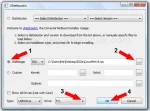
UNetbootin: Create a Linux Bootable USB Quickly and Easily. Short for Universal Netboot Installer, UNetbootin is a lightweight, open source utility used to create bootable Linux USB flash drives from ISO files without requiring a CD or DVD. It remains a simple option for testing or installing many Linux distributions, particularly on legacy BIOS or older UEFI systems.

How to Open, Enter or Access BIOS Using Hotkeys

Enter BIOS

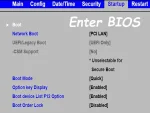
Learn how to enter BIOS or access the boot menu using keyboard hotkeys on any computer. Whether you need to boot from USB, change boot order, or adjust system settings, this guide shows the exact keys for every major manufacturer.

Move WUBI Ubuntu Install to an external USB drive

files on the usb drive

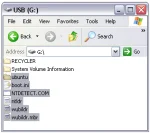
Move WUBI Ubuntu to an External USB Drive: In this comprehensive tutorial, we show you how to move your existing WUBI Ubuntu installation to an external USB drive. This enables you to carry your personalized Ubuntu environment with you and boot it on any compatible PC without modifying your internal drives.

Fixing the Error: Could not find kernel image: Linux

could not find kernel image linux

How to Fix the "Could Not Find Kernel Image: Linux" Boot Error. This error message typically occurs during the boot process of a Linux system and is most commonly seen when booting from a USB flash drive. It indicates that the bootloader (most often Syslinux, and less commonly GRUB) cannot locate the kernel image required to start the operating system. In this guide, you'll learn several proven steps to diagnose and fix this issue so you can get your system booting again.

ALL In One PenDriveLinux 2008

all in one qemu pendrivelinux 2008

ALL In One PenDriveLinux 2008: The Portable Linux Breakthrough. This version was a groundbreaking portable Linux distribution designed to run seamlessly from a USB flash drive. It could operate either as a standalone operating system at boot or within Windows using a Virtual Machine (Qemu). This innovative design allowed users to enjoy a fully portable Linux environment, complete with persistent storage to save changes such as installed software, bookmarks, email, and contacts.

How to Create a CentOS Stream Bootable USB

centos bootable usb

USB CentOS Stream Installation: How to create a bootable CentOS Stream USB drive on Windows, Linux, or macOS. This guide shows how to write the official installer ISO to a flash drive so you can boot, test, and optionally install CentOS Stream on a PC or server. A bootable USB is ideal for evaluating the platform, learning enterprise Linux workflows, or preparing for deployment.

How to Fix Ubuntu 8.04 Casper script for Persistence

Along with the final release of Ubuntu 8.04 came a bug which broke the persistence feature, ultimately dropping the user to a shell when booting with the persistent option. As it turns out, the problem lies with permissions being set to 755 for the cow device (strangely enough the prereleases did not have this problem). In the following tutorial, I will show you how to quickly fix the problem. This is the same process we used to create the custom initrd.gz file that is distributed with our Ubuntu, Kubuntu and Xubuntu 8.04 Hardy Heron related USB flash drive installation tutorials.

Create a Fedora Live USB

fedora live usb

Easily Create a Fedora Live USB: This walkthrough tutorial explains how to install and boot Fedora Linux from a USB flash drive from within Windows, Linux, or macOS by using Fedora Media Writer, YUMI Multiboot USB Creator, or the Linux dd command. Fedora is a free and open source Linux distribution sponsored by Red Hat and developed by a global community. It is known for integrating cutting edge technologies while remaining stable, secure, and well suited for developers, system administrators, and Linux enthusiasts who want to run or install Fedora from a bootable USB drive.
Install STUX Linux to a USB Flash Drive

stux persistent

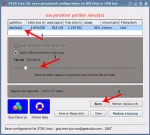
Create a STUX Bootable USB Flash Drive using the Live CD: STUX Linux is a unique Linux distribution that combines the robustness of Slackware Linux 11.0 packages with the powerful hardware detection of Knoppix 5.0.1. Ideal for system administrators, developers, and Linux enthusiasts, STUX supports a wide range of hardware, including graphics cards, sound cards, USB devices, and SCSI peripherals. Additionally, it comes preloaded with popular software such as Apache and PHP, making it suitable for local web development environments.

Ubuntu 8.04 USB Hard Drive Install

restart now

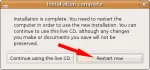
Ubuntu 8.04 USB Hard Drive Installation; This tutorial covers one way to install Ubuntu 8.04 (Hardy Heron) to an external USB Hard drive. It is also possible to install Ubuntu to a 4GB+ flash drive using this method as we did, however, due to the additional write cycles that occur on a full blown install, the life of your flash drive may be reduced. Unless you use a Fast Solid State USB Flash Drive.

How to Make an OpenSUSE Bootable USB Drive

openSUSE bootable usb

Effortlessly Make an OpenSUSE Bootable USB Drive: This tutorial demonstrates multiple methods for creating a bootable OpenSUSE USB drive using YUMI, Etcher, or the DD command. Depending on your needs, you can boot a portable live environment from USB or perform a full installation to another USB stick or internal hard drive.

Fully Install SUSE on USB

uncheck the option to mount automatically

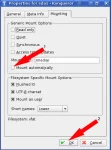
Fully Install SUSE on USB; The following tutorial covers the process of installing SUSE Linux on to a USB Drive using the OpenSUSE Live media. The process is made possible due to a custom Portable SUSE script created by James Rhodes. The user basically boots from the Live OpenSUSE media and performs the installation via the included YaST2 Install script to install SUSE to a USB drive. Then the user reboots from the Portable SUSE installation and launches the custom script to convert some files in the running system for portable compatibility.
Make a gOS USB Flash Drive using Windows

screenshot of gos running from usb

The following tutorial explains how to create a bootable gOS USB flash drive using Windows. You can use either the popular Universal USB Installer or the command-line utility dd for Windows to get the job done. Both methods allow you to run gOS directly from a USB flash drive.

Make a USB Bootable KALI Linux with Persistence

USB Kali Linux with persistence

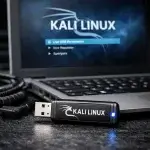
How to Effortlessly Make a USB Bootable KALI Linux with Persistence Using YUMI on Windows: KALI Linux, based on Debian, is designed specifically for penetration testing and security auditing. It includes a vast collection of security tools such as network analyzers, password crackers, wireless testing utilities, exploit frameworks, and fuzzers, making it ideal for cybersecurity professionals, students, and enthusiasts.

Make a MCNLive Bootable USB Flash Drive

mcnlive toronto screenshot

The following covers one way to make a MCNLive bootable USB flash pen drive in just a few steps from within Windows. By using this method, you don't need to burn the ISO to a CD and then run the USB installer from Linux. Instead, the Universal USB installer is used to automatically create the MCNLive USB flash drive for you.

Install PCLinuxOS MiniMe to Flash Drive via CD

pclinuxos 2008 minime screenshot

The following tutorial covers the process of creating a PCLinuxOS MiniMe USB flash drive via the intuitive Make LiveUSB installer that is included with the Live CD. Although the script is not perfect, it does get most of the job done. However, there are some additional steps necessary to make your Portable PCLinuxOS MiniMe work properly.

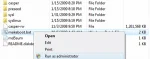
Running Makeboot.bat in Vista

right click and run as administrator

Some Windows Vista users may experience an issue when attempting to run the makeboot.bat file from their USB drive. The makeboot.bat file is suppose to install a syslinux hidden ldlinux.sys file and the MBR to make the drive bootable. However, in such cases, the script may display an error that looks something like the following:
Ubuntu Remote Desktop Access

ubuntu remote desktop access

Learn How to Set Up Ubuntu Remote Desktop Access for Remote Control and Screen Sharing: This updated guide shows you how to set up Ubuntu Remote Desktop Sharing using the built in GNOME Remote Desktop with either VNC or RDP support.